The Malassezia Cycle: Why Carbon Chain Length is the Secret to Seb Derm Relief
If you’ve struggled with persistent flaking, redness, and itching around your nose, eyebrows, or hairline, you likely already know the frustration of "dry skin" that never seems to stay hydrated.
The truth is, for many, this isn't dry skin at all. It is Seborrheic Dermatitis, and the traditional way we treat "dryness" is exactly what keeps the cycle of irritation alive by feeding the organism at the heart of the problem.
The Biological Trigger: Malassezia Yeast
Every human has a yeast called Malassezia living naturally on their skin. In a healthy skin environment, it causes no issues. However, for those prone to Seb Derm, this yeast overgrows and triggers a localized inflammatory response.
The yeast survives by consuming oils (lipids) on your skin. As it breaks these oils down, it leaves behind oleic acid, which penetrates the skin barrier and causes the redness, itching, and "scales" we identify as a flare-up.
The Skincare Trap: Why Most Moisturizers Fail
This is the "cruel" part of Seb Derm: standard moisturizers often act as high-energy fuel for the yeast.
Most natural oils (like coconut, olive, or jojoba) and many synthetic creams contain long-chain fatty acids with carbon chains ranging from C11 to C24. Malassezia has evolved specifically to "eat" these chains. When you apply a typical moisturizer to a Seb Derm flare-up, you aren't just hydrating your skin—you are feeding the very organism causing the inflammation.
The C8 Breakthrough: Why C12 and C10 Don't Cut It
To stop the cycle, you must provide hydration that the yeast cannot metabolize. This is where the science of MCT (Medium Chain Triglycerides) comes in. Not all MCT oils are created equal, and using the wrong one can be counterproductive:
-
C12 (Lauric Acid): Often found in cheap "MCT blends" or coconut oil. Research shows Malassezia can feed on C12. If your product doesn't specify it is "Pure C8," it likely contains C12, which can actually make your Seb Derm worse.
-
C10 (Capric Acid): While harder for the yeast to process than C12, it is still within a range that certain strains can utilize for growth.
-
C8 (Caprylic Acid): This is the gold standard. C8 is a potent antifungal that the yeast cannot break down. It bypasses the yeast's metabolic path entirely, effectively starving the overgrowth while providing the essential fatty acids your skin barrier needs to heal.
The Chinsei Formula: Starve & Repair
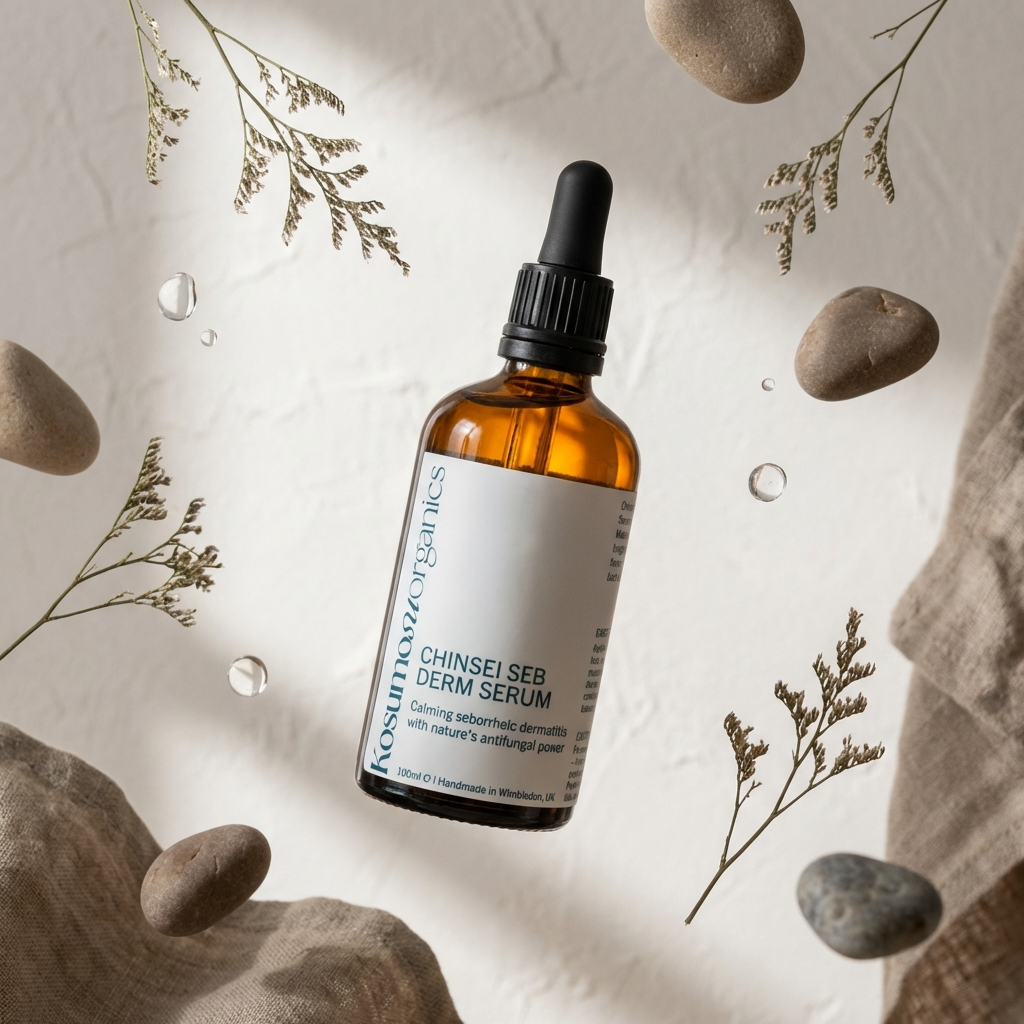
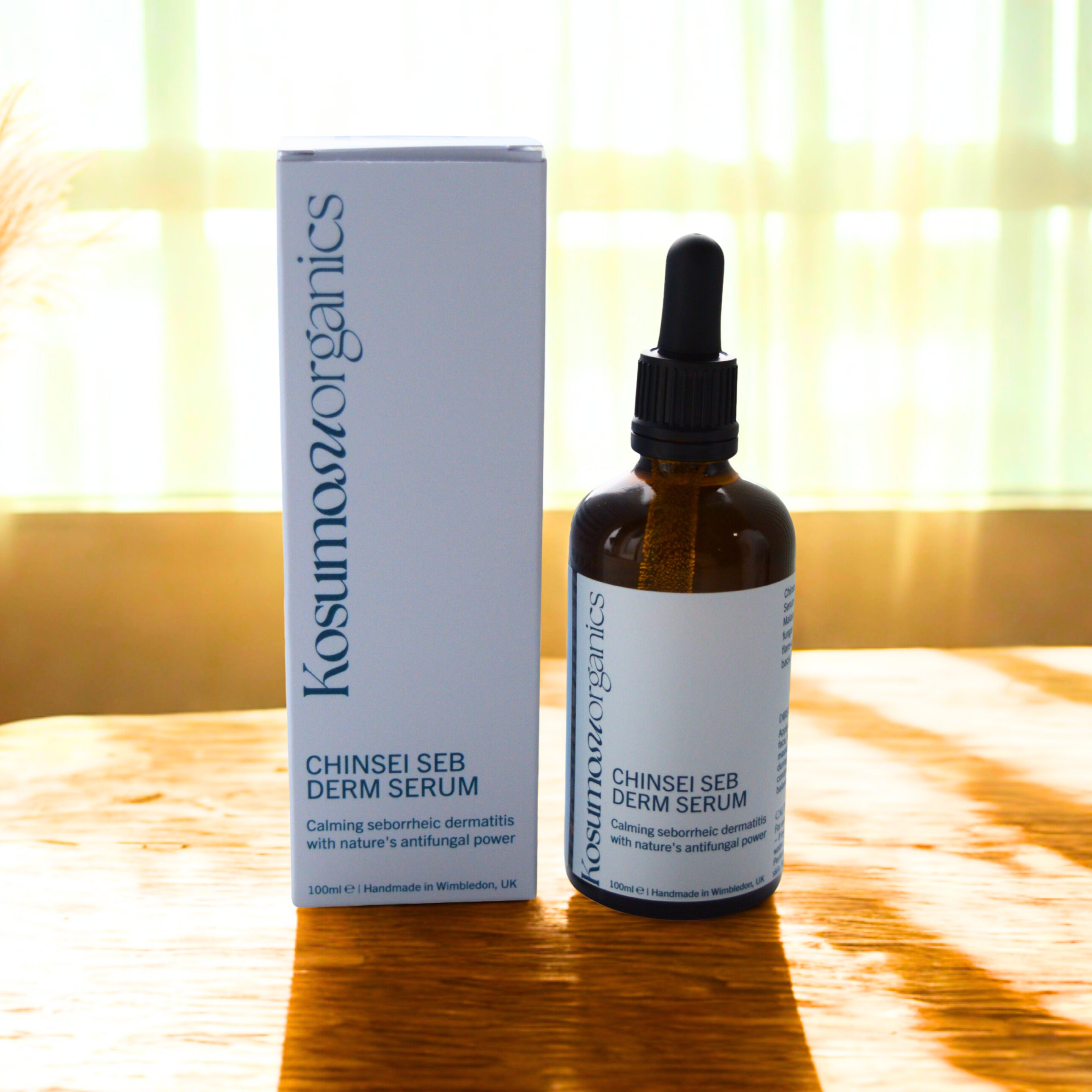
We didn't just create another moisturizer; we engineered a targeted defense system. Most "natural" products are a minefield for Malassezia sufferers, hiding yeast-feeding fatty acids behind green labels. Chinsei Seb Derm Serum is different. It is formulated to be a complete sanctuary for reactive skin, focusing on a dual-action approach: Starve and Repair.
Phase 1: Selective Starvation (Pure C8 MCT)
While most brands use generic "MCT oil" to save on costs, those blends often hide C12 (Lauric Acid)—the primary food source for Malassezia. At Chinsei, we absorb the premium cost of sourcing 100% Pure C8 Caprylic Acid. By using a carbon chain that the yeast physically cannot metabolize, we cut off its life support. You get the rich, lipid-replenishing benefits of an oil without providing a single molecule of "fuel" for the flare-up.
Phase 2: Impenetrable Hydration (C30 Squalane)
True healing requires deep hydration, but how do you moisturize without feeding the yeast? We chose Squalane for its massive C30 backbone. At 30 carbons long, the molecular structure is far too large and complex for Malassezia to break down. This allows the serum to sink deep into your skin, restoring the moisture barrier and stopping the "tight, itchy" sensation, all while remaining completely "invisible" to the yeast.
Phase 3: Microbiome Defense (Tea Tree)
To support your skin’s natural recovery, we infused the formula with organic Tea Tree. This adds a final layer of antifungal and antibacterial protection, helping to balance your skin's microbiome and calm the inflammation that causes redness and flaking.
The Result: You aren't just managing symptoms. You are fundamentally changing the environment of your skin, making it a place where Malassezia can no longer thrive, allowing your natural complexion to finally return.